
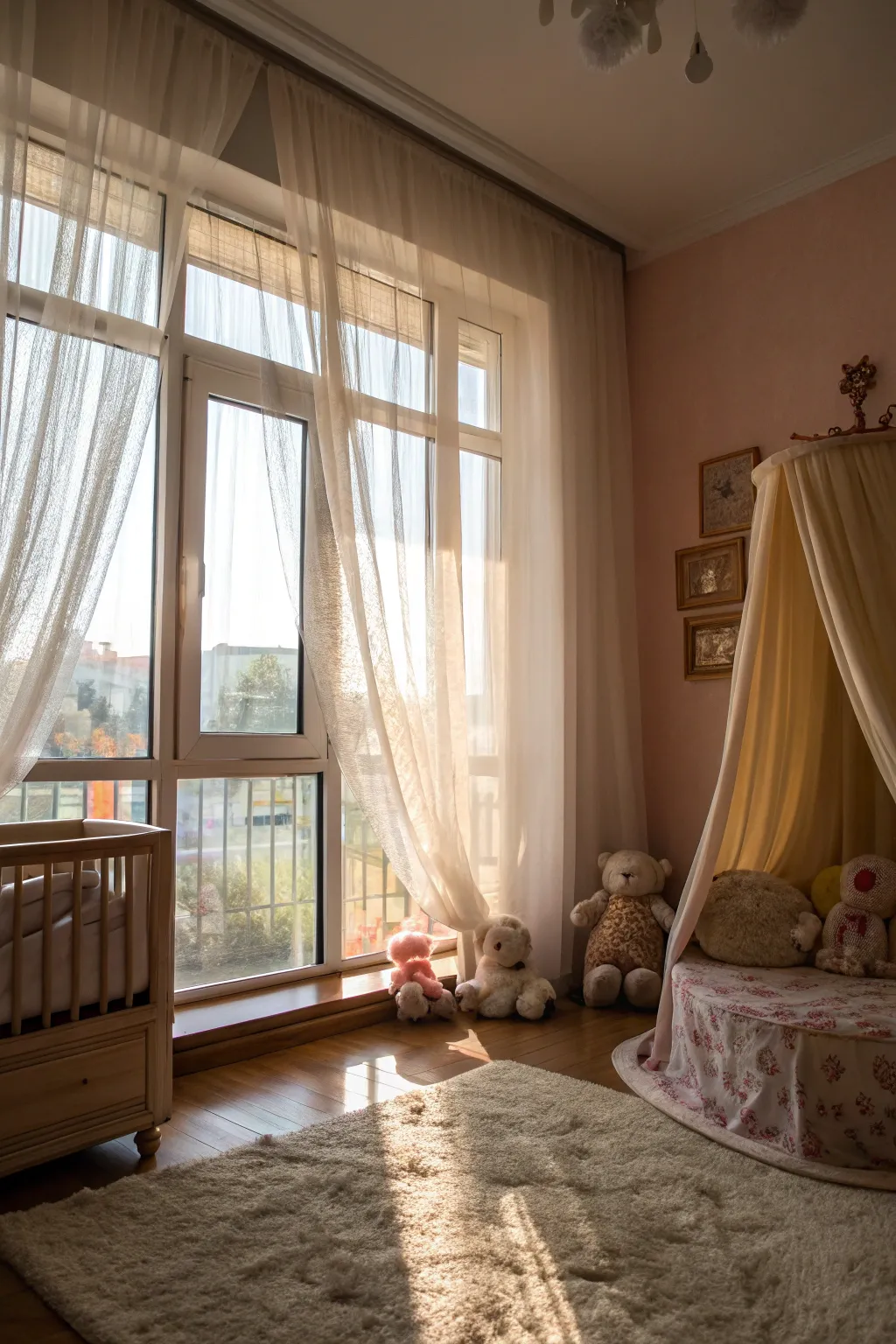
Designing an infant room in a daycare setting is like orchestrating a symphony of colors, textures, and safety elements. Let’s dive into some creative ideas to make your infant space a haven for growth and comfort.
1. Sensory Play Stations

Create sensory play stations with items that vary in texture, sound, and color. These stations encourage infants to explore and develop their sensory processing skills.
Possibly handy products:
- Textured Sensory Balls: Encourage tactile exploration with these textured sensory balls. Perfect for developing fine motor skills.
- Colorful Stacking Rings: Boost color recognition and motor skills with vibrant stacking rings. Fun and educational for infants.
- Musical Activity Table: Introduce rhythm and sound exploration through a delightful musical activity table. Engage auditory senses seamlessly.
2. Quiet Retreat

Designate a quiet corner with soft cushions and dim lighting for infants needing a break. This space allows them to recharge and find comfort away from activity.
Maybe worth checking out:
- Infant Play Tent: Create a cozy hideaway for infants to relax and play, fostering a sense of comfort.
- Soft Floor Cushions: Add comfort and support with plush floor cushions perfect for resting and quiet time.
- String Lights: Enhance the ambiance with gentle string lights, offering a soothing glow for nap times.
3. Family Photo Wall

Create a family photo wall where parents can add pictures, helping infants recognize familiar faces. This adds a personal touch and strengthens family connections.
Explore these options:
- Collage Photo Frames: Display multiple family photos at once and add a touch of warmth to the nursery decor.
- String Lights with Clips: Illuminate cherished memories with clip-on string lights, creating a cozy and inviting photo display.
- Decorative Wall Decals: Enhance the family wall with charming decals, adding color and personality to the infant room.
4. Color-Pop Walls

Introduce vibrant colors on the walls to create an engaging atmosphere for infants. From soft pastels to bright hues, this splash of color stimulates visual development.
A few relevant products:
- Vibrant Wall Decals for Nursery: Transform your space instantly with easy-to-apply, colorful decals. Perfect for visual stimulation.
- Non-Toxic Paint Set for Nurseries: Choose safe, colorful paints to create a vibrant, engaging environment for infants.
- Colorful Wall Art for Infant Rooms: Add charm and color with delightful wall art, enhancing the nursery’s playful atmosphere.
5. Soft Flooring

Ensure safety with soft flooring options like foam mats or plush carpets. These provide a comfortable surface for crawling and exploring, essential for developing motor skills.
Products that could assist:
- Interlocking Foam Puzzle Mats: Create a cushioned play area for infants, perfect for crawling and developing motor skills.
- Plush Nursery Rugs: Enhance comfort with soft carpets that make playtime safe and enjoyable for little ones.
- Soft Play Mats for Babies: Install these mats for a safe and inviting space where infants can explore freely.
6. Cozy Reading Nook

Set up a cozy reading nook with age-appropriate books and soft lighting. Encouraging a love for books early on fosters language development and bonding time.
May just do the trick:
- Soft LED String Lights: Add warmth and charm to the reading nook with soft LED lights for a cozy atmosphere.
- Children’s Bookshelf: Keep books organized and accessible with a compact and safe bookshelf for little readers.
- Comfortable Bean Bag Chair: Provide a plush seating option that encourages relaxation and comfort during reading time.
7. Personalized Name Tags

Add a personal touch with custom name tags for each infant’s cubby or crib. This not only organizes the space but also creates a sense of belonging.
Try these:
- Adhesive Label Name Tags: Add charm with adhesive labels, ensuring each cubby reflects the child’s unique identity.
- Magnetic Name Plates: Use magnetic name plates for easy re-arrangement and a clean, organized look.
- Customizable Wooden Name Signs: Give a rustic touch with customizable wooden signs, tailored to each child’s style.
8. Eco-Friendly Choices

Opt for eco-friendly materials that are safe for infants and the environment. Sustainable choices in furniture and toys contribute to a healthier space.
A few things you might like:
- Sustainable Wooden Baby Crib: Give your baby a safe sleep space with a crib made from eco-friendly materials.
- Organic Cotton Baby Blanket: Wrap your little one in comfort with an organic cotton blanket that’s gentle and eco-friendly.
- Natural Wooden Infant Toys: Encourage play with toys crafted from natural wood, safe for infants and the environment.
9. Interactive Rugs

Lay down interactive rugs with patterns and textures to stimulate sensory play and crawling. These rugs make for a safe and engaging play surface.
You might give these a try:
- Sensory Play Mat Tiles: Encourage exploration with textured play mat tiles, perfect for sensory development and safe crawling.
- Textured Foam Floor Mats: Provide a safe, cushioned space for infants with textured foam mats designed for sensory play.
- Interactive Crawling Rugs: Stimulate sensory engagement and motor skills with interactive crawling rugs equipped with various textures.
10. Interactive Wall Panels

Install interactive wall panels to engage infants’ curiosity and develop their sensory skills. These panels can feature different textures, mirrors, and small interactive elements.
A few suggestions:
- Sensory Texture Wall Panel: Engage infants with tactile exploration; promotes sensory development and curiosity in daycare environments.
- Mirror with Safe Edges: Stimulate visual tracking and self-recognition with child-safe mirrors, perfect for interactive play.
- Interactive Play Wall Elements: Enhance learning with interactive shapes and colors; boosts cognitive skills and motor development.
11. Themed Zones

Divide the room into themed zones like a reading corner or a nap area. This structure helps infants recognize different activities and transition smoothly between them.
Might be a good match:
- Children’s Bean Bag Chairs: Add cozy seating to your reading corner, enhancing comfort and engagement during storytime.
- Baby Play Mats: Create a soft, safe surface in play areas, stimulating infants’ crawling and sensory exploration.
- Nursery Book Display Shelves: Organize books neatly, fostering a love for reading in an accessible and attractive manner.
12. Cultural Connections

Reflect diverse cultures in the decor to foster cultural awareness and inclusivity. This can be achieved through art, fabrics, and books from various cultures.
You might like:
- World Culture Art Prints: Add vibrant world culture art prints to spark interest and appreciation in diverse backgrounds.
- Multicultural Children’s Books: Introduce young readers to diverse stories and characters with multicultural children’s books.
- Cultural Fabric Wall Hangings: Enhance the room with cultural fabric wall hangings to celebrate inclusivity and global diversity.
13. Musical Elements

Introduce musical elements such as soft background tunes or baby-safe instruments. Music can enhance cognitive development and create a soothing atmosphere.
A few choices to try:
- Soft Baby Musical Mobile: Engage infants with soothing tunes to promote relaxation and joyful moments in your daycare.
- Wooden Baby Xylophone: Introduce music to toddlers with this colorful xylophone, enhancing fine motor and auditory skills.
- Baby-Safe Drum Set: Encourage rhythmic play with a baby-safe drum, fostering creativity and sound exploration.
14. Nature’s Touch

Incorporate natural elements like plants or nature-themed decor to add a calming vibe. This not only soothes infants but also enhances the room’s aesthetic.
Useful items to consider:
- Artificial Potted Plants: Add greenery without maintenance. Perfect for creating a soothing and natural ambiance for infants.
- Nature-Themed Wall Decals: Enhance the room’s decor with easy-to-apply decals that bring a touch of nature indoors.
- Woven Storage Baskets: Organize toys and essentials while adding a rustic charm with eco-friendly woven baskets.
15. Flexible Furniture

Use flexible furniture like movable shelves and foldable tables to adapt the space for different needs. This versatility is key in a dynamic daycare environment.
Possibly helpful picks:
- Movable Shelves: Organize effortlessly with movable shelves that adapt to your daycare’s changing needs.
- Foldable Tables: Maximize space with foldable tables, perfect for dynamic setups in your infant room.
- Storage Bins with Wheels: Keep toys tidy and accessible with wheeled storage bins designed for flexibility.
16. Mirror Play

Incorporate mirrors at infants’ eye level to encourage self-discovery and social interaction. Mirror play is a simple yet effective way to support emotional development.
These products might help:
- Baby-Safe Wall Mirror Panels: Encourage self-discovery and development with shatterproof mirror panels safe for infants’ play areas.
- Portable Standing Baby Mirror: Support infants’ emotional growth with a lightweight, freestanding mirror perfect for interactive play.
- Tummy Time Mirror with Soft Frame: Enhance your infant’s engagement with this cozy, soft-framed mirror perfect for tummy time activities.
17. Playful Ceiling Decor

Hang playful ceiling decorations such as mobiles or soft fabric streamers. These can capture infants’ attention and provide visual stimulation as they lie on their backs.
A few helpful options:
- Colorful Hanging Mobiles: Transform your infant’s room with colorful mobiles that captivate and engage their senses effortlessly.
- Soft Fabric Streamers: Add a whimsical touch with soft fabric streamers to create soothing visual movement and interest.
- Hanging Paper Lanterns: Enhance decor with playful paper lanterns, adding dimension and color to your baby’s space.
18. Light and Airy Ambiance

Maximize natural light with large windows and sheer curtains. A bright and airy room boosts mood and creates a welcoming environment for infants and caregivers alike.
Give these a look:
- Sheer Window Curtains: Enhance natural light flow with sheer curtains, creating a calm and bright environment.
- Soft Area Rug: Add warmth and texture to the nursery with a plush, comfortable area rug.
- Wooden Crib with Mattress: Choose a classic wooden crib to complement the airy space and provide a safe sleep haven.