
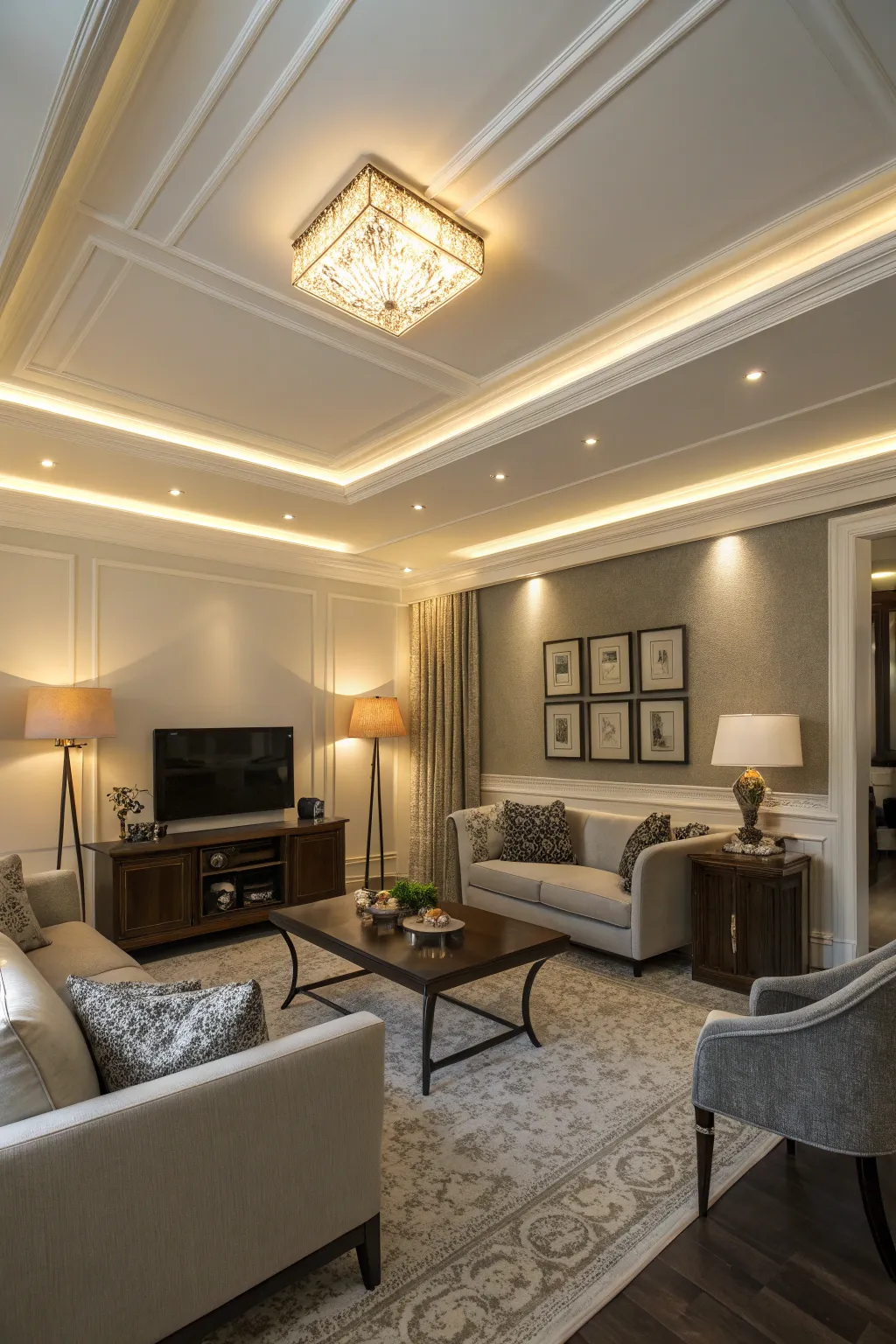
The perfect finishing touch for your living area could be decorative trim. Let’s explore 18 imaginative ways to add this architectural detail to your home.
1. Mirror Frame Illusion

Create an illusion of framed mirrors by adding decorative trim around large wall mirrors. This technique introduces depth and can make your living room seem larger and brighter.
Items that may come in handy:
- Decorative Trim Pieces: Add elegance to your mirrors with decorative trim for a refined and spacious look.
- Expansive Wall Mirrors: Elevate your room’s depth and brightness with stylish and expansive wall mirrors.
- Adhesive Mirror Squares: Easily customize your space with versatile adhesive mirror squares for a unique design touch.
2. Subtle Shadow Accent

Achieve a shadow-like effect by painting just the upper edge of the decorative trim a darker tone. This is a delicate yet elegant way to highlight your space, like defining your room with subtle detail, adding dimension without being overpowering.
A few helpful options:
- Complete Interior Paint Set: Transform your room with a darker shade for decorative trim and simply enhance its dimension.
- Beveled Paint Brush: Achieve accuracy and crisp lines on your decorative trim with this indispensable beveled brush.
- Dependable Masking Tape: Guarantee crisp lines and protect your walls when painting decorative trims with this reliable tape.
3. Timeless White Style

There’s an enduring appeal to traditional white decorative trim. It effortlessly complements any color palette, providing a sharp, pristine appearance that enhances the room’s atmosphere. I often suggest this to clients seeking adaptability and sophistication in their homes.
Some ideas to consider:
- Classic Trim Set: Beautify your living space with this flexible trim set that exudes timeless beauty and appeal.
- Specialized Trim Paint: Get a perfect look with premium paint made for a crisp, fresh aesthetic.
- Elegant Ceiling Accent: Draw attention to your lighting fixture with an eye-catching accent that elevates your ceiling’s beauty.
4. Highlighting Historical Features

Restore and highlight historic decorative trim to celebrate your home’s architectural history. A fresh layer of paint can reveal the intricate details, adding a sense of historical charm.
You might like:
- Classic Ceiling Ornament: Enhance your trim’s elegance with a ceiling ornament. Elevate your living room’s historic appeal.
- Vintage Paint Collection: Use vintage paint to accentuate your historic decorative trim. Add timeless beauty effortlessly.
- Antique Wall Lighting: Set up antique lighting to complement your trim. Create a warm, historic ambiance.
5. Double Layer Effect

For an added hint of elegance, think about a double layer of decorative trim. This method adds a luxurious dimension and can be accentuated with a contrasting color in the middle.
Give these a look:
- Complete Trim Package: Enhance beauty with this trim package, ideal for creating exquisite double layers.
- Contrast Color Paint: Improve dimension and appeal with high-quality trim paint for impressive color contrasts.
- Refined Ceiling Ornament: Round out your luxurious look with an ornate ceiling ornament that adds timeless appeal.
6. Minimalist Design

Even minimalists can appreciate decorative trim with a very slender design. This style retains the sharp, uncluttered lines that are crucial in minimalist spaces, adding subtle elegance.
A few things you might like:
- Slender Trim Accents: Enhance your minimalist space with sleek, slender trim for subtle elegance.
- Streamlined Ceiling Accent: Complement your design with a minimalist ceiling accent, adding elegance without overwhelming.
- Paintable Trim Design: Customize your look easily with a paintable trim design for perfect color matching.
7. Striking and Gorgeous

For those who enjoy making a statement, painting your decorative trim in a striking hue can turn it into a captivating point of interest. I’ve witnessed how a deep blue or a vibrant green can reinvent a room, introducing character and richness.
Possibly handy products:
- Premium Home Paint: Change your room with strong, striking colors such as blue or green for added impact.
- Precision Masking Tape: Get sharp, precise lines with masking tape, ideal for bold decorative trim projects.
- Professional Brush Collection: Use a superior brush collection to ensure a flawless application on your decorative trim.
8. Extravagantly Detailed

For those who value opulence, elaborate decorative trim is the ideal choice. Its intricate details offer a hint of timeless sophistication, perfect for formal living spaces or any area where you want to impress.
A few relevant products:
- Detailed Trim Set: Enhance your living area with fine craftsmanship. Easily achieve a grand, stately feel.
- Period-Inspired Ceiling Rose: Incorporate a historical element with this detailed rose. Excellent for enhancing the elegance of your lighting.
- Lightweight Decorative Trim: Easily set up this lightweight trim that comes pre-finished. Add appeal without the complexity of carpentry.
9. Trim as a Headboard

Repurpose decorative trim to make a distinct headboard for your living room daybed or sofa. It’s an inventive way to introduce architectural appeal and design a statement piece.
Some handy options:
- Trim Headboard Kit: Change your daybed with a stylish trim kit for an elegant architectural accent.
- Heavy-Duty Trim Adhesive: Ensure firm setup of your trim headboard with high-strength adhesive.
- Customizable Trim Accents: Customize your space with customizable trim accents to perfectly match your living room style.
10. Geometric Details

Play with geometric details in your decorative trim to introduce a modern touch. This can create an engaging visual attraction and enhance contemporary interiors.
Explore these options:
- Geometric Trim Package: Add striking geometric elegance to your living room with this easy-to-install trim package.
- Patterned Ceiling Squares: Transform your ceiling into a stunning focal point with these modern patterned ceiling squares.
- Trim Design Templates: Explore creativity and precision with design templates for creating geometric trim designs.
11. Integrated Lighting

Incorporate lighting within your decorative trim to produce a multi-layered lighting effect. This not only highlights the trim but also provides ambient lighting that sets the mood.
Maybe worth checking out:
- LED Light Strips: Enhance ambience effortlessly by adding LED light strips to your decorative trim for subtle lighting.
- Smart Lighting Control: Control your layered lighting with ease using a smart hub for seamless ambiance adjustments.
- Recessed Lighting Fixtures: Create a polished look by setting up recessed lighting. Perfect for a sophisticated lighting layer.
12. Cozy Wood Look

A wooden appearance on decorative trim brings a sense of warmth and rustic charm. I frequently incorporate this into rooms needing a comfortable, welcoming vibe, particularly when aiming for a countryside-inspired atmosphere.
These products might help:
- Authentic Wood Trim: Infuse warmth into your space with authentic wood trim. Perfect for a comfortable, rustic charm.
- Specialized Wood Finish: Create a deep, warm finish on trim. Great for adding an inviting, rustic touch.
- Deluxe Wood Finishing Set: Complete your decorative trim project with this finishing set for a cozy, refined appearance.
13. Beam Terminations

If your living room features exposed beams, decorative trim can offer the ideal termination point. It beautifully frames the beams, resulting in a unified architectural detail.
You might give these a try:
- Decorative Beam Trim: Boost your living room’s elegance by effortlessly framing beams with stylish decorative trim.
- Flexible Trim Solution: Create seamless beam terminations with adaptable, easy-to-install flexible trim.
- Coordinated Trim Accents: Achieve a cohesive look by matching your beam’s wood finish with stylish trim.
14. Consistent Texture

Employ consistent decorative trim to achieve a continuous, enveloping result. Painting the trim the same color as your walls introduces depth and texture without disturbing the visual harmony.
Useful items to consider:
- Consistent Trim Set: Improve your living room design by setting up seamless, color-matched decorative trim with ease today.
- Coordinating Wall Paint: Achieve a unified appearance by painting your trim and walls the same color easily.
- Textured Wall Covering: Add richness and texture to your living space with sophisticated, consistent textured wall covering.
15. Trim for Displaying Art

Use decorative trim to create stylish displays. By setting up a small ledge, you can display art pieces or photos, turning your trim into a functional and ornamental feature.
Might be a good match:
- Trim with Display Ledge: Enhance your living room with stylish trim ledges to display art pieces beautifully.
- Gallery Frame Display: Use these ledges to elegantly display your favorite photos and art collection effectively.
- Secure Art Display: Secure your art displays using sturdy hooks, ensuring a neat and organized appearance.
16. Smooth and Rounded

Go minimalist with smooth, rounded decorative trim. This style presents a contemporary edge, producing a fluid link between the wall and ceiling, perfect for today’s living spaces.
These products might be useful:
- Rounded Trim Kit: Revamp your living space with elegant curves for a smooth, modern aesthetic.
- Adaptable Trim Strip: Effortlessly achieve contemporary style with this flexible trim strip in your living space.
- Advanced Trim Adhesive: Ensure a firm application of your new trim with this dependable adhesive.
17. Combined Materials

Mix different materials like wood and plaster to design a unique decorative trim. This approach introduces texture and can be a great topic of conversation in your living room.
Consider these options:
- Wood Finish Trim: Enhance your living room’s elegance with rich wood trim. Transform your space instantly.
- Plaster Ornaments: Add architectural flair with detailed plaster ornaments. Make your ceiling a focal point.
- Trim Corner Blocks: Create seamless transitions with stylish corner blocks. Elevate your trim design.
18. Contrasting Ceiling

Emphasize your decorative trim by painting the ceiling a contrasting shade. This strategy frames the space beautifully, drawing the eye upward and enhancing the room’s sense of space.
May just do the trick:
- Premium Ceiling Paint: Choose a vibrant ceiling paint to enhance your room’s presence and highlight decorative trim effectively.
- Superior Masking Tape: Ensure sharp, clean lines with superior masking tape designed for perfect edges on ceilings.
- Precision Brush Set: Achieve precise detail work with ergonomic angled brushes perfect for decorative trim areas.